
Best ERP System for Construction Industry: Odoo ERP
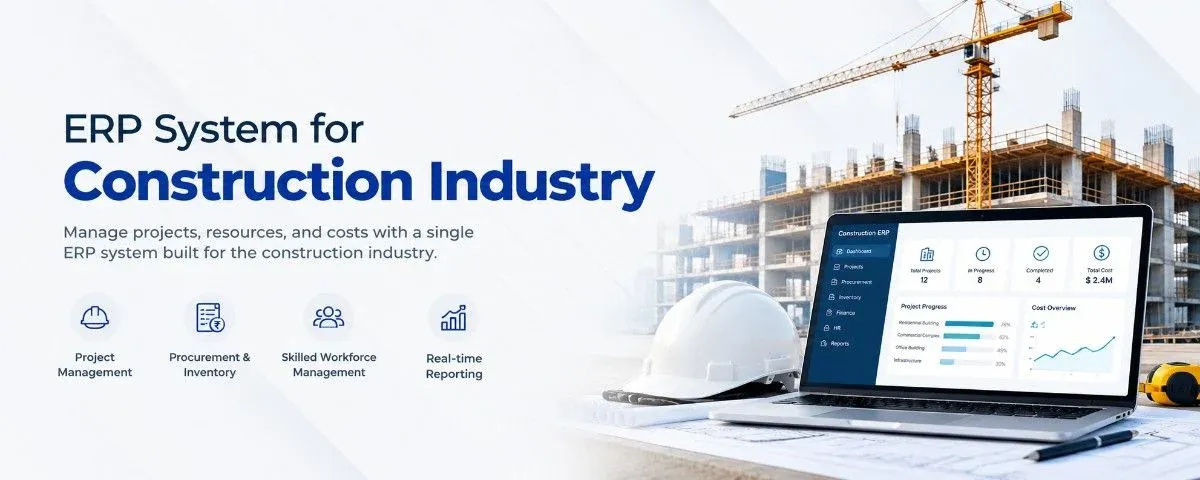
An ERP system for the construction industry needs to manage far more than accounting and employee information. Construction companies deal with multiple project sites, contractors, suppliers, materials, equipment, labour, purchase orders, project budgets, and customer payments at the same time. When these activities are maintained in separate spreadsheets or software, getting a clear picture of project cost and progress becomes difficult.
Odoo ERP for the construction industry brings these business activities into a connected ERP environment. Construction companies can manage project planning, procurement, inventory, employee timesheets, field activities, sales, invoicing, documents, and accounting through a common system.
Odoo is also flexible enough to be configured according to the working model of a contractor, property developer, engineering company, infrastructure business, or construction service provider.
7 Key Reasons Construction Companies Need an ERP System
- 1. Project Management : Manage project tasks, deadlines, stages, responsibilities, and progress from a single platform.
- 2. Material Management : Track construction materials, tools, equipment, and consumables across warehouses and project sites.
- 3. Purchase Management : Manage suppliers, quotations, purchase orders, and material requirements in a structured workflow.
- 4. Labour Tracking : Record employee working hours against specific projects and tasks to monitor labour usage.
- 5. Project Cost Control : Track purchases, expenses, labour costs, invoices, and revenue to understand project financial performance.
- 6. Site Coordination : Connect office teams with site employees through field activities, task assignments, schedules, and updates.
- 7. Document Management : Organize contracts, drawings, permits, quotations, inspection reports, and other project documents in one place.
Odoo ERP System for Construction Industry
Odoo offers a modular ERP environment that can be configured around different construction workflows. Instead of forcing every business to follow one fixed process, the system can be arranged according to how a company estimates, purchases, executes, monitors, and bills its projects.
For example, a construction project may begin with a customer quotation or contract. Once the project is confirmed, project tasks can be created, materials can be planned, purchase activities can be initiated, and required products can be received at a warehouse or project location. Employee time and expenses can then be recorded against the project while financial information is used for invoicing and reporting.
This connected workflow becomes particularly useful for companies handling several construction projects simultaneously.
Odoo Modules Used in Construction
- Project : Used to create construction projects, divide work into tasks, establish stages, assign responsibilities, and monitor deadlines.
- Purchase : Helps construction companies manage suppliers, RFQs, purchase orders, and procurement activities for materials and services.
- Inventory : Supports the movement and tracking of construction materials, tools, equipment, and consumables across warehouses and project locations.
- Sales : Used for preparing quotations, managing customer orders, and connecting confirmed sales with project activities.
- Accounting : Handles invoices, payments, expenses, financial transactions, and project-related accounting information.
- Timesheets : Allows employees to record working hours against specific projects and tasks.
- Field Service : Supports field activities where engineers, technicians, supervisors, or service teams need to work at customer or project locations.
- Planning : Helps assign employees and organize resources around project activities.
- Documents : Provides a structured place for project contracts, drawings, permits, reports, and other business documents.
- Employees : Maintains employee information and workforce records required for managing project teams.
- CRM : Helps manage construction leads, sales opportunities, customer interactions, and potential projects.
- Fleet : Can be used to manage company vehicles and relevant construction equipment.
The advantage of this modular approach is that businesses can select the applications required for their operations and connect them within the same ERP environment.
Odoo Project Management for Construction
Construction projects involve multiple stages, teams, and deadlines. The Odoo Project module helps organize these activities within a structured workflow.
- Project Stages : Projects can follow stages such as Site Preparation → Foundation → Structural Work → Electrical & Plumbing → Finishing → Inspection → Handover.
- Task Assignment : Tasks can be assigned to employees or teams with planned dates and deadlines.
- Multiple Projects : Different construction sites or projects can be managed separately within the same Odoo database.
- Progress Tracking : Project managers can monitor completed, pending, and delayed activities from the project workspace.
Odoo Purchase Management for Construction Materials
Construction projects require regular purchasing of materials, equipment, and site supplies. Odoo Purchase helps organize these activities through a structured procurement process.
- Building Materials : Manage purchases of cement, steel, bricks, tiles, paint, and other construction materials.
- Electrical & Plumbing Supplies : Track cables, switches, pipes, fittings, valves, and related products.
- Site Supplies : Manage tools, safety equipment, protective materials, and consumables.
- Supplier Management : Maintain supplier records, quotation requests, purchase orders, and approval workflows.
This helps construction businesses manage project purchasing without relying on separate spreadsheets for each site.
Odoo Inventory for Multiple Construction Sites
Construction materials often move between warehouses, suppliers, and project locations. OdooInventory helps businesses maintain visibility over these stock movements.
- Warehouse Management : Manage materials across warehouses and different storage locations.
- Site Transfers : Transfer required materials from the main warehouse to specific construction sites.
- Stock Visibility : Check available quantities and the recorded location of materials.
- Material Movement : Record receipts, deliveries, internal transfers, and inventory adjustments.
A typical workflow can be Main Warehouse → Project Site → Site Storage → Construction Team.
Odoo Timesheets for Labour Tracking
Labour costs are an important part of construction projects. OdooTimesheets allows employees to record working hours against specific projects and tasks.
- Project Time Tracking : Record hours spent on different construction activities.
- Site Supervision : Track time spent by engineers, supervisors, and site teams.
- Skilled Labour : Monitor hours for masonry, electrical, plumbing, installation, and engineering work.
- Billing Support : Timesheets can support billing for time-based or time-and-material contracts where required.
This gives project managers better visibility into labour usage and project time.
Odoo Field Service for On-Site Construction Activities
Construction teams often work across different project locations. Odoo Field Service helps organize site activities and assign work to field employees.
- Field Tasks : Assign site activities with instructions, schedules, and responsibilities.
- Site Information : Associate customer or project locations with field activities.
- Work Updates : Teams can update task status and record work completed on-site.
- Time and Materials : Track time spent and materials used for relevant field tasks.
This connects site teams with office-based project, inventory, purchasing, and finance operations.
Odoo Accounting and Project Cost Control
Construction companies need to monitor both project progress and financial performance. Odoo connects accounting with project, purchase, sales, expenses, and invoicing activities.
- Estimated Cost : Plan expected project expenses during the project preparation stage.
- Actual Cost : Track purchases, expenses, labour information, and other project-related costs.
- Revenue : Monitor customer invoices and project-related sales.
- Project Margin : Compare project revenue with associated costs to understand profitability.
Odoo's analytical accounting can also help organize financial information around individual projects or other business requirements.
Odoo Documents for Construction Drawings and Contracts
Construction projects generate contracts, drawings, permits, reports, quotations, and other documents. Odoo Documents helps organize these files within the ERP environment.
- Contracts : Store customer agreements, supplier contracts, and project documents.
- Technical Drawings : Organize architectural and engineering files related to projects.
- Permits & Reports : Keep permits, inspection reports, and site documentation accessible to authorized users.
- Commercial Documents : Manage quotations, purchase documents, invoices, and related files.
Keeping these records organized helps project teams find important information without depending on scattered file storage.
Construction ERP Customization in Odoo
Every construction company has different project structures and operational requirements. Odoo can be configured or customized when standard functionality does not fully match a specific process.
- Project Cost Sheets : Create cost structures based on individual construction projects.
- Material Requisitions : Configure material request workflows for project and site teams.
- Approval Workflows : Set approval processes for purchases, expenses, quotations, and other transactions.
- Subcontractor Management : Add workflows for managing subcontractor-related activities.
- Site Dashboards : Create dashboards showing project and site information required by management.
- Progress-Based Invoicing : Configure billing around project milestones or agreed commercial terms.
- Custom Reports : Develop reports for project costs, profitability, materials, purchases, and labour.
- External Integrations : Connect Odoo with other business applications when required.
The level of customization should be based on actual business needs, while standard Odoo features should be used wherever they meet the company's requirements.
Benefits of Using Odoo ERP for Construction
A suitable ERP system for construction industry operations should give project teams access to relevant information without requiring them to maintain multiple disconnected systems.
Better Project Visibility
- Project Overview : Managers can monitor project stages, tasks, deadlines, responsibilities, and activities from a connected system.
Improved Material Control
- Inventory and Procurement : Purchasing and inventory information can work together to provide a clearer picture of material availability and procurement requirements.
Better Labour Tracking
- Employee Timesheets : Working hours can be recorded against projects and tasks, making labour information easier to review.
Easier Project Cost Analysis
- Cost Information : Purchases, expenses, labour information, invoices, and project records can be used together for financial analysis.
Faster Access to Information
- Connected Records : Employees can access relevant project, customer, purchase, inventory, and document information according to their permissions.
Multi-Project Management
- Separate Project Structures : Businesses can manage multiple construction projects within one Odoo environment while maintaining separate project records.
Flexible Reporting
- Management Reports : Reports can be configured around projects, customers, purchases, inventory, employees, financial transactions, and other business requirements.
Odoo ERP Implementation for Construction Companies by Lenok Infotech
Implementing an ERP system for construction industry businesses requires the system to match their project, procurement, inventory, workforce, and accounting processes. Lenok Infotech supports businesses with Odoo implementation, customization, integration, migration, training, and technical support.
| Stage | Lenok Infotech Support |
|---|---|
| Requirement Study | Understand construction projects, procurement, inventory, labour, and accounting processes. |
| Process Mapping | Map existing workflows to suitable Odoo applications. |
| Odoo Configuration | Configure Odoo based on business and project requirements. |
| Customization | Develop project workflows, reports, approvals, and other required features. |
| Data Migration | Move relevant business data from existing systems to Odoo. |
| Integration | Connect Odoo with required external applications and systems. |
| Testing & Training | Test workflows and train users on the configured Odoo system. |
| Go-Live & Support | Assist with deployment and provide ongoing technical and functional support. |
Lenok Infotech Experience : Our Odoo experience covers implementation, customization, integration, data migration, training, reporting, and post-go-live support for different business requirements.
Why Choose Lenok Infotech for Odoo Implementation?
Selecting an Odoo implementation companyis an important decision because the initial ERP configuration can influence how employees work with the system after deployment.
- Odoo Implementation : Lenok Infotech can configure Odoo applications according to construction business processes and operational requirements.
- Odoo Customization : Specific project, procurement, reporting, or operational requirements can be addressed through custom development.
- Odoo Integration : External applications and business systems can be connected with Odoo where required.
- Data Migration : Existing ERP and business data can be assessed and migrated into the new Odoo environment.
- User Training : Employees can receive guidance on the Odoo workflows relevant to their responsibilities.
- Technical Support : Ongoing technical assistance can help businesses address system and workflow issues.
- Project Reporting : Reports and dashboards can be configured according to management requirements.
- Post-Go-Live Support : Support can continue after the ERP becomes part of the company's daily operations.
For construction businesses, the main objective is to connect project execution with purchasing, inventory, workforce management, sales, and accounting rather than managing every department as an isolated function.
- For Growing Project Operations : A structured ERP setup can provide a common platform for managing multiple projects and locations.
- For Businesses Using Spreadsheets : Moving important project and operational information into an ERP can reduce dependence on disconnected manual records.
If your construction company is looking for an ERP system for construction industry operations, Lenok Infotech can help assess your requirements and identify the Odoo applications, configuration, customization, and integrations needed for your business.
Ready to Transform Your Business?
Talk to Lenok Infotech today to discover the right IT, ERP, cloud, and digital solutions for your business. Get expert guidance tailored to your goals and take the next step with confidence.
Frequently Asked Questions About Construction ERP
1. What ERP system do construction companies use?
Construction companies use ERP systems such as Odoo, Microsoft Dynamics 365, SAP, Oracle, and other industry-focused construction ERP software. These systems help manage project management, purchasing, inventory, labour, accounting, documents, and multiple construction sites from one platform.
2. What is the best ERP system for the construction industry?
The best ERP system for the construction industry depends on the company's project size, number of users, budget, workflows, and required features. Odoo ERP is one option because its modular applications can be configured for project management, purchasing, inventory, accounting, timesheets, field service, documents, and other construction operations.
3. What are the top 3 ERP systems for construction companies?
Three widely used ERP options for construction businesses include Odoo, Microsoft Dynamics 365, and SAP. The right choice depends on the company's business requirements, project complexity, budget, integrations, and customization needs.
4. What are the four types of ERP?
ERP systems can generally be categorized by their deployment and business model, including on-premise ERP, cloud ERP, hybrid ERP, and industry-specific ERP. Companies select the type based on their infrastructure, security, operational requirements, and industry needs.
5. What are the five main ERP modules?
Five common ERP modules are Accounting and Finance, Inventory Management, Purchase Management, Sales and CRM, and Human Resources. Construction companies may also require project management, timesheets, field service, planning, documents, and other modules depending on their workflows.
6. What is a construction ERP system?
A construction ERP system is business software designed to connect construction activities such as project management, procurement, inventory, labour tracking, accounting, sales, and document management. It helps construction companies manage project and business information through a connected system.
7. How does Odoo ERP help construction companies?
Odoo ERP helps construction companies manage projects, tasks, purchasing, inventory, employee timesheets, field activities, sales, invoicing, accounting, and documents. Its modular structure allows businesses to use the applications relevant to their construction operations.
8. Can Odoo ERP manage multiple construction projects?
Yes. Odoo can manage multiple construction projects within the same database. Each project can have its own tasks, stages, deadlines, responsibilities, materials, costs, and related records, allowing businesses to manage different project sites separately.
9. Can Odoo track construction materials across different sites?
Yes. Odoo Inventory can record material receipts, deliveries, internal transfers, inventory adjustments, and stock locations. Construction businesses can use warehouses and locations to track materials moving between the main warehouse and different project sites.
10. Can Odoo track construction labour costs?
Yes. Odoo Timesheets allows employees to record working hours against specific projects and tasks. This information can help construction companies monitor labour usage and analyse project-related costs.
11. Can Odoo manage construction project costs?
Yes. Odoo can connect project, purchase, expense, timesheet, sales, invoicing, and accounting information. Businesses can use this information to compare estimated costs, actual costs, revenue, and project margins.
12. Can Odoo be customized for construction companies?
Yes. Odoo can be configured and customized for specific construction workflows. Customizations may include project cost sheets, material requisitions, approval workflows, subcontractor management, site dashboards, progress-based invoicing, custom reports, and external integrations.
13. What modules are needed for a construction ERP?
A construction ERP may include Project, Purchase, Inventory, Accounting, Sales, Timesheets, Field Service, Planning, Documents, Employees, CRM, and Fleet. The required modules depend on the company's construction processes and operational requirements.
14. Is Odoo suitable for construction companies in India?
Yes. Odoo can be configured for construction businesses in India based on their project management, procurement, inventory, accounting, workforce, reporting, and integration requirements. The specific configuration should be based on the company's business processes.
15. How much does construction ERP software cost?
The cost of construction ERP software depends on factors such as the number of users, required modules, customization, integrations, data migration, implementation, and support. There is no single price that applies to every construction company.
16. What should I consider when choosing a construction ERP system?
Consider project management, material tracking, procurement, labour management, accounting, multi-project support, reporting, integrations, customization, user requirements, implementation, and ongoing support. The ERP should match the company's actual construction workflows rather than only the number of available features.