
Odoo Implementation Services for Businesses growth
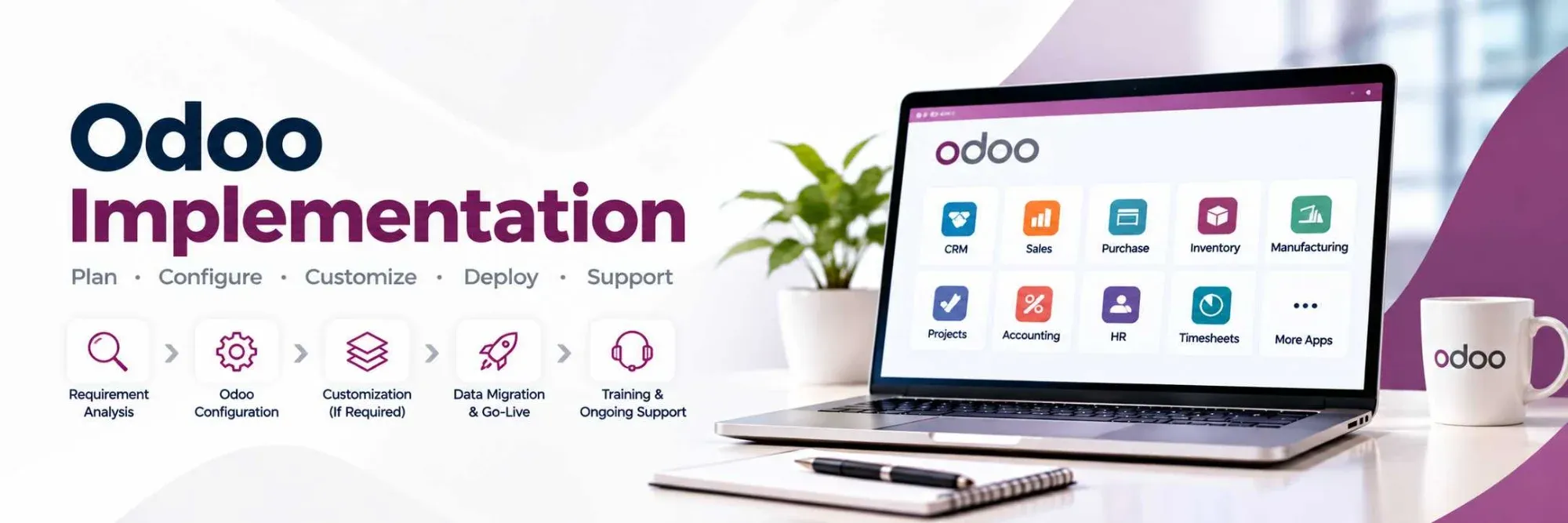
As businesses grow, managing sales, procurement, inventory and accounting across separate systems becomes difficult. This can lead to scattered data, wasted time and delayed decisions. Lenok Infotech provides Odoo implementation services to bring these operations together in one system. We first understand your business processes and then configure Odoo to support your daily operations and business needs.
Unify Your Business Departments with Odoo ERP
Think about a business organization that is getting orders from customers daily. The sales team will be preparing quotations; the warehousing team will be checking stocks; the purchasing team will be contacting suppliers; and finally, the accounts team will make the payments. In case each team has its own set of data, one single order can take several phone calls to complete.
Odoo unites all of this together. The sales team can use the product and stock information; the warehousing team can manage delivery, while the accounts department can use transactions created from business activity.
Depending on your business requirements, Odoo can be configured with applications such as:
- CRM and Sales: Manage inquiries, opportunities, quotations and track customer orders from within a single interface.
- Inventories and Purchases: Manage available quantities, warehouse management, purchase orders and receiving deliveries.
- Finance: Track financial transactions, supplier invoices, customer invoices and business accounting.
- Manufacturing: Schedule production orders, parts requirements, Bills of Materials and work centres operations.
- Human Resources: Track employee information, attendance and leave requests and HR documentation.
- Project Management: Allocate tasks to employees, project activity tracking, timesheets and project progress.
- Retail and POS: Manage counter sales, products availability and link retail transactions with inventories.
The choice will be determined by the way your business runs. A company that requires improved stock management starts with Inventories and Purchases, while others need CRM, Sales and Accounting to start with. Further applications will be added when necessary.
From Business Requirements to a Functional Odoo System
ERP implementation is not just a question of technology. Prior to starting the implementation process, it is important for the company to understand how the flow of information will occur between the different departments and who will have access to it.
At Lenok Infotech, we start by learning about the processes followed by our clients' employees and use current software, spreadsheet usage, approvals, and reporting requirements to inform our design.
Workflow analysis
Next, we describe how orders, payments, inventory, and other processes take place. This allows us to pinpoint inefficient steps, duplication of effort, and problems related to information access.
Choosing the right Odoo modules
Based on gathered requirements, we determine which Odoo apps must be used in our project. Moreover, we examine the interaction between different Odoo applications, ensuring that the entire solution will allow the company to run full-scale business processes, not just those of separate departments.
Odoo Configuration
Odoo configuration includes such areas as products, taxation, warehouses, security roles, approval process, reports and others. When a business requirement exceeds capabilities of the standard Odoo features, then we should consider customization of the system.
Data preparation and migration
The switch to a new ERP solution shouldn't leave any crucial business data behind. Customer and supplier data, products' data, initial balances, and inventory data will have to be checked before migration takes place. We can assist with planning the process and verify that imported data meets the agreed criteria.
Checking business processes prior to going live
It is important to perform testing in real-life scenarios that the employees face during their work. It might involve quoting a customer, approving an order, accepting received purchase, creating an invoice, or verifying stock status. Such tests help to find weaknesses before it is too late to do anything about them.
Assisting the employees to adjust to the new ERP
The success of launch will depend on the comfort level at which the employees operate the software.
ERP Implementation for Manufacturers, Distributors, Constructors and Other Businesses
All industries have specific ERP needs. Manufacturers will need to have the management of production, Bills of Material, work centers, and material usage. Traders and distributors have to consider order management from suppliers, stock management, and delivery schedules.
Construction companies will need project management, timesheets, material procurement, and costs. Retailers will need point of sale and inventory, while service businesses will need customer inquiries, project assignments, hours worked, and invoicing.Lenok Infotech takes these industry workflows into consideration when installing Odoo and uses applications based on the operational needs of each business.
Odoo Setup in Dubai and Other Emirates
The UAE business can have different offices and warehouses that might require configuration of ERP software accordingly. Odoo provides support for the UAE currency, VAT configuration, accounting, and multi-company environment, among other things.
For instance, the company based in Dubai, with warehouses in other emirates, would have to have different inventory locations and access rights. Lenok Infotech takes this into account when implementing Odoo software.
Selection of a Good Odoo ERP Implementation Firm
Selecting a proper implementation firm can make all the difference to the success of your ERP project. Select a company that understands your business, your industry, and your technical requirements. Before you choose the company, think about its experience in configuring and customizing Odoo, migrating your data, and integrating third party applications. Think about the implementation process, the level of transparency in projects, and the kind of support provided after go live.
If you are a company based in UAE, then having local VAT expertise and other financial process knowledge is equally important. Select an Odoo ERP implementation firm that is focused on your business.
Cost and Time Needed to Implement Odoo Project in UAE
The amount that will be spent on the Odoo project will depend on what the company is expecting from the system. The implementation of a couple of Odoo applications would naturally differ from the implementation of systems with many warehouses, factories and complex approvals process.
- Some important variables affecting the total cost include:
- Odoo apps and number of users.
- Level of complexity of existing processes in business.
- New reports and customization needed.
- Integration with other software and systems.
- Amount of existing data.
- Training and support after implementation.
Duration of project will depend not only on these, but also on the availability of data, schedule of testing and time that is needed to approve workflows by business users.Requirement analysis is done to determine what should be implemented, what will need to be customized and how much resources will be required for this.
Explore Our Implementation Guides :
This pillar page gives you an idea about Odoo implementation of ERP software for business efficiency. Check out our implementation guides to know more about implementation methodologies, selecting the right partner, regional requirements and ERP support:
- Best Odoo Implementation Company: The guide will help you choose the right Odoo implementation company through industrial experience, technical competence, execution and support post implementation.
- Odoo Implementation UAE: The guide explains the requirements of Odoo ERP implementation in UAE businesses, which include VAT configuration, business process, multi-companies and accounting process in the region.
- Odoo ERP Implementation in Dubai: The guide covers the requirements for implementing Odoo ERP in Dubai, including business process, configuration, integration and workflow.
- Odoo Implementer: Get familiar with the role of an Odoo implementer in configuring the business process, module installation, implementing process and user support.
Ready to Transform Your Business?
Talk to Lenok Infotech today to discover the right IT, ERP, cloud, and digital solutions for your business. Get expert guidance tailored to your goals and take the next step with confidence.
Frequently Asked Questions
1. How do I choose the right Odoo implementation partner?
Choose a partner with proven Odoo experience, industry knowledge, transparent project planning and reliable post-implementation support. Make sure they understand your business requirements before suggesting customizations.
2. What is the Odoo implementation methodology?
Odoo implementation generally involves requirement analysis, business process mapping, system configuration, customization, data migration, testing, employee training and go-live support.
3. What services are included in Odoo implementation?
Odoo implementation services may include module configuration, workflow customization, data migration, third-party integration, user training, testing and ongoing technical support.
4. How much does Odoo implementation cost in the UAE?
Odoo implementation costs depend on the number of users, required modules, customization, data migration and integrations. A detailed requirement assessment helps determine the project cost.
5. How long does an Odoo implementation project take?
The timeline depends on business complexity, the number of modules, data migration and customization requirements. A basic implementation may take less time than a multi-department or multi-company project.
6. Can Odoo be customized to match my business requirements?
Yes. Odoo supports configuration and custom development to adapt workflows, reports, approvals and integrations to specific business requirements. Customization should be planned carefully to simplify future upgrades.