
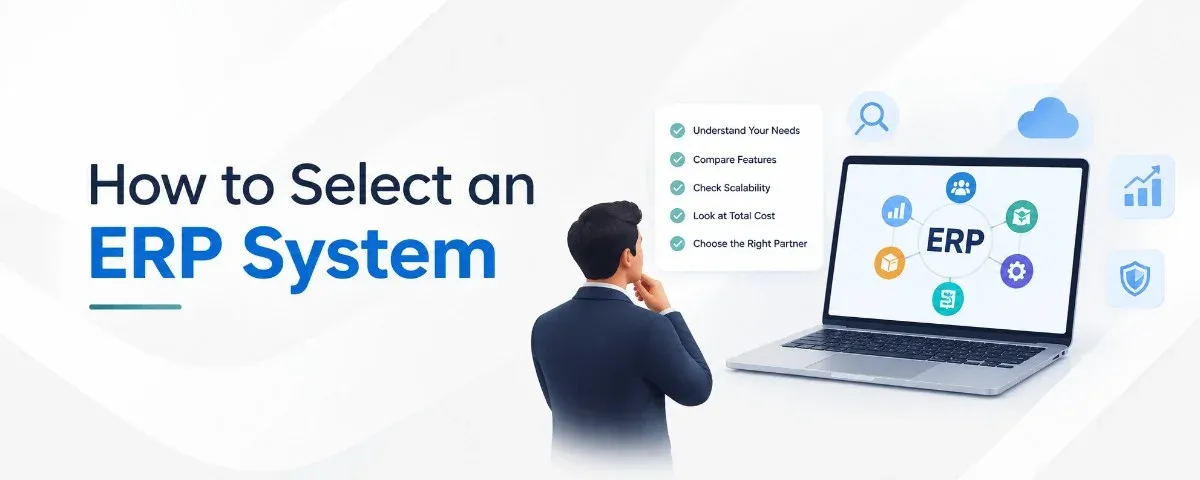
Choosing an ERP system is an important decision for any growing business.
Choosing an ERP system is an important decision for any growing business. The right ERP can bring finance, sales, inventory, purchasing, manufacturing, customer management, and other business operations into one connected system. However, selecting the right solution is not simply about choosing the software with the most features.
Before selecting an ERP, a business needs to understand what it actually requires from the system. The right choice should match the company's current operations, employees, budget, future plans, and industry requirements.
Here are 7 essential business needs to consider when selecting an ERP system, including how solutions such as Odoo ERP can fit different business requirements.
01. A Clear Understanding of Your Business Requirements
The first requirement for selecting an ERP system is knowing what your business needs to improve. A company should identify the problems it currently faces in areas such as accounting, inventory, sales, purchasing, customer management, production, or reporting.
For example, if employees are using spreadsheets for inventory management and separate software for accounting, the business may need an ERP that connects these activities in one system. Clearly understanding these requirements makes it easier to compare ERP solutions and avoid paying for unnecessary features.
Odoo ERP can be considered when a business needs multiple applications working together. Its modules cover areas such as CRM, sales, accounting, inventory, purchasing, manufacturing, project management, and more.
02. Employees Who Can Use and Adapt to the ERP
An ERP system is only useful when employees can use it properly. Businesses should consider whether their employees can understand the system, follow new processes, and adapt to changes in their daily work.
A complicated ERP may create frustration if employees do not receive proper training or if the system does not match their existing workflow. Before making a decision, businesses should involve the people who will actually use the ERP and collect their feedback.
Odoo provides a user-friendly interface across its business applications, but proper training and implementation are still important. The success of any ERP depends not only on the technology but also on how well employees accept and use it.
03. A System That Fits Your Business Size
Every business does not need the same type of ERP system. A small company may require basic accounting, sales, inventory, and CRM functions, while a larger organization may need advanced manufacturing, supply chain management, reporting, and multiple company operations.
The ERP should therefore be suitable for the current size of the business without creating unnecessary complexity. At the same time, it should have enough flexibility to support the company as it grows.
Odoo ERP follows a modular approach, allowing businesses to start with the applications they need and add other applications as their requirements increase. This can make it a practical option for businesses that expect their operations to expand.
04. Integration With Your Existing Business Systems
Modern businesses rarely operate with a single application. They may use payment gateways, eCommerce platforms, shipping systems, CRM tools, payroll software, marketplaces, or other specialized applications.
When selecting an ERP, businesses should check whether the system can connect with the tools they already use. Good integration reduces duplicate data entry and helps information move between departments more efficiently.
Odoo can connect different business functions within its own platform and can also be integrated with external systems when required. Before choosing any ERP, it is important to understand the available integrations and whether custom integration work will be necessary.
05. A Solution That Can Grow With Your Business
An ERP should not only solve today's problems. It should also support the business as its operations become larger and more complex.
A growing company may add new employees, products, branches, customers, warehouses, or business processes. If the ERP cannot handle these changes, the company may eventually need to replace the system, creating additional cost and disruption.
Scalability is therefore an important part of ERP selection. Odoo ERP can be expanded by adding different applications and business functions as requirements change, making flexibility an important consideration for growing organizations.
06. A Budget That Includes More Than Software Cost
ERP budgeting should not be based only on the software subscription or license price. Businesses also need to consider implementation, customization, data migration, integrations, training, support, maintenance, and other project-related costs.
A solution that appears inexpensive at the beginning may become expensive if it requires extensive customization or additional third-party systems. On the other hand, a solution with a higher initial investment may provide better long-term value if it reduces manual work and supports business growth.
When comparing ERP systems, businesses should look at the overall cost and expected value rather than focusing only on the initial price. Odoo is often considered by businesses looking for a flexible ERP approach with different applications that can be introduced according to their requirements.
07. The Right ERP Implementation Partner
Choosing the ERP software is only one part of the decision. The implementation partner can have a major impact on whether the project succeeds.
A good ERP partner should understand the company's industry, business processes, technical requirements, data migration needs, integrations, customization requirements, and employee training needs. They should also explain the implementation process clearly instead of simply focusing on selling the software.
For businesses considering Odoo ERP, working with an experienced Odoo implementation partner can help with requirement analysis, configuration, customization, integration, migration, training, and ongoing support. The right partner should focus on solving business problems rather than adding unnecessary features.
How to Know Which ERP System Is Right for Your Business
There is no single ERP system that is perfect for every business. The right choice depends on the company's size, industry, processes, budget, employees, existing technology, and future goals.
Before making a final decision, businesses should compare different ERP solutions against their actual requirements. A proper demonstration or business analysis can also help decision-makers understand how the system would work in real business situations.
Odoo ERP is one option businesses can evaluate because it combines multiple business applications within one platform and allows organizations to select and expand functionality according to their needs.
Final Thoughts
Selecting an ERP system should be treated as a business decision, not simply a software purchase. A company should first understand its requirements, employees, business size, integration needs, growth plans, budget, and implementation support.
By evaluating these 7 essential business needs, organizations can create a clearer ERP selection process and reduce the risk of choosing a system that does not fit their operations.
Whether a business is considering Odoo ERP or another ERP platform, the most important goal is to choose a solution that can solve current problems, improve everyday operations, and support future growth.
Ready to Transform Your Business?
Talk to Lenok Infotech today to discover the right IT, ERP, cloud, and digital solutions for your business. Get expert guidance tailored to your goals and take the next step with confidence.
Frequently Asked Questions About Selecting an ERP System
1. How do I select an ERP system?
Identify your business needs, budget, users, integrations, and future growth. Then compare ERP systems based on features, usability, scalability, cost, and support.
2. What are the main ERP selection criteria?
The main criteria include functionality, ease of use, scalability, integration, security, customization, cost, and vendor support.
3. What should an ERP requirements checklist include?
It should cover finance, sales, CRM, inventory, purchasing, manufacturing, reporting, integrations, security, migration, training, and support.
4. What is the ERP selection process?
The process includes identifying requirements, researching solutions, comparing ERP systems, evaluating vendors, requesting demos, checking costs, and making the final selection.
5. What qualities should I look for in an ERP system?
Choose an ERP that is reliable, easy to use, flexible, secure, scalable, and suitable for your business processes.
6. What questions should I ask an ERP vendor?
Ask about pricing, implementation, customization, integrations, data migration, training, support, security, upgrades, and previous project experience.
7. Is Odoo a good ERP system?
Odoo can be a suitable option for businesses looking for connected applications for accounting, CRM, sales, inventory, purchasing, manufacturing, and other operations.
8. How much does an ERP system cost?
ERP costs depend on users, modules, customization, implementation, integrations, training, and ongoing support.
9. Why is scalability important in ERP selection?
A scalable ERP can support business growth by handling more users, products, customers, warehouses, branches, and processes.
10. Should I choose a customized or standard ERP?
Choose standard features where possible. Customization should be considered only when specific business requirements cannot be handled effectively through standard configuration.
11. Why is an ERP implementation partner important?
An experienced partner can help with requirements, configuration, customization, migration, integration, training, testing, and ongoing support.
12. What are the 7 steps for successful ERP implementation?
The main steps are planning, requirement analysis, data preparation, configuration, integration, testing and training, followed by go-live and support.