
Odoo Restaurant ERP System for Complete Restaurant Management
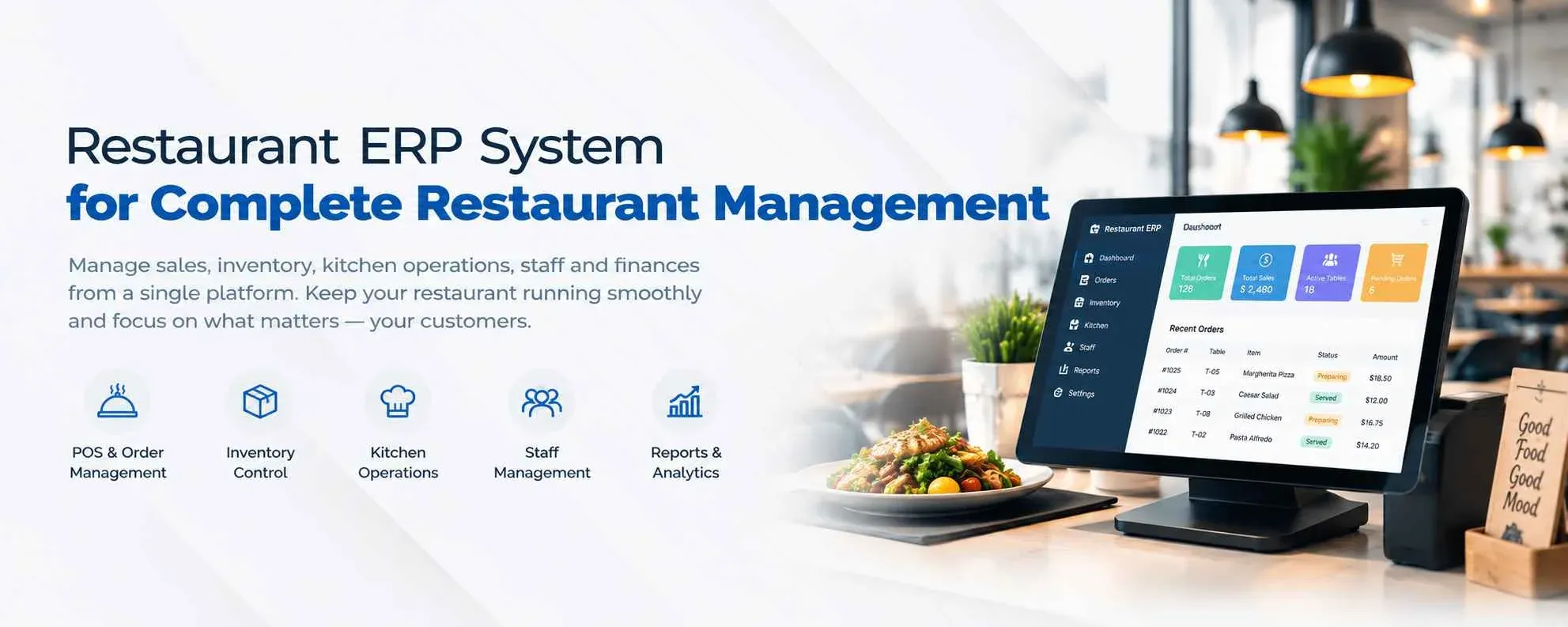
The restaurant industry requires continuous coordination between sales, kitchen operations, inventory, purchasing, accounting, employees, and customers. When these activities are managed through separate software applications, restaurant owners may find it difficult to maintain accurate information and monitor the overall performance of their business. A restaurant ERP system provides a way to bring these business processes into a connected ERP environment.
Odoo is a flexible ERP platform that can be configured to support restaurant operations ranging from individual outlets and cafés to cloud kitchens, catering businesses, and multi-branch restaurant groups. Odoo Point of Sale can manage restaurant orders, while Inventory, Purchase, Accounting, CRM, Employees, and other applications can support the business processes behind those orders.
Lenok Infotech provides Odoo implementation and development services for businesses looking to use Odoo as their restaurant ERP system, including customization, integration, migration, training, and ongoing support.
Odoo as a Restaurant ERP System
Odoo can be configured as a complete restaurant ERP system by combining the applications required for a restaurant's specific operations. The system does not have to be limited to billing or point-of-sale activities. Restaurant businesses can use Odoo to manage front-office transactions as well as several back-office processes.
The modular structure of Odoo allows a business to select the applications that are relevant to its operations. A small café may require POS, Inventory, Purchase, and Accounting, while a restaurant chain may require additional applications for multiple locations, employees, CRM, reporting, integrations, and customized workflows.
This approach allows the restaurant ERP system to be designed around the business instead of forcing the restaurant to change every process to fit a fixed software package.
Odoo Point of Sale for Restaurant Operations
The Point of Sale module is one of the central components of an Odoo restaurant ERP system. Restaurant employees can use the POS interface to create customer orders, manage tables, process payments, apply discounts, and handle different types of restaurant transactions.
Odoo POS can be configured for dine-in and takeaway operations, multiple payment methods, product variants, order notes, customer information, refunds, discounts, and other restaurant requirements. Restaurant managers can also configure different POS setups based on the way individual outlets operate.
For restaurants with multiple counters or branches, the POS environment can be organized according to the company's operational structure.
Odoo Kitchen Management for Restaurants
Kitchen coordination is an important consideration when implementing a restaurant ERP system. Orders entered at the POS need to reach the appropriate preparation area without creating unnecessary manual communication between front-office and kitchen staff.
Odoo can be configured to support kitchen workflows and route relevant order information to designated preparation areas. A restaurant with separate sections for food, beverages, desserts, or other preparations can structure its workflow according to its internal process.
This allows the restaurant ERP system to connect customer ordering with kitchen operations while keeping order information available to the relevant employees.
Odoo Inventory Management for Restaurants
Inventory management has a direct effect on restaurant operations because food businesses continuously purchase and consume ingredients. A restaurant ERP system therefore needs to provide visibility into the movement and availability of stock.
The Odoo Inventory module can be used to manage ingredients, beverages, packaging materials, storage locations, warehouses, receipts, internal transfers, and inventory adjustments. Restaurants can organize products according to their own stock management practices and storage structure.
Odoo can also be configured to support replenishment rules for products that need to be maintained at particular stock levels. This can help purchasing teams identify requirements before essential materials become unavailable.
Odoo Food Recipe and Product Management
Restaurant products are often prepared using multiple ingredients rather than being sold directly from purchased stock. This makes product and recipe management an important part of a restaurant ERP implementation.
Odoo can use product structures and Bills of Materials where appropriate to represent the ingredients associated with particular food products. A restaurant can define the components required for products such as pizzas, burgers, bakery items, prepared meals, or other menu products.
This provides a structured relationship between menu items and the materials used in their preparation. The actual configuration can be designed according to the restaurant's production process and inventory requirements.
Odoo Purchase Management for Restaurants
Restaurants depend on regular purchases from suppliers, including food ingredients, beverages, packaging materials, cleaning products, and other operational supplies. Managing these purchases within the restaurant ERP system gives the purchasing team a common place to maintain supplier and procurement information.
The Odoo Purchase module supports vendor management, requests for quotations, purchase orders, product receipts, and vendor bills. Purchasing activities can therefore be connected with inventory and accounting processes instead of being maintained separately through spreadsheets or manual records.
For restaurants with several locations, purchasing workflows can also be structured according to the company's central or branch-level procurement requirements.
Odoo Accounting for Restaurant Businesses
Financial information is an important part of any restaurant ERP system because restaurant operations generate a large number of daily transactions. Sales, supplier purchases, expenses, payments, taxes, and other financial activities need to be properly recorded and monitored.
Odoo Accounting can be connected with relevant sales and purchasing processes. Restaurant businesses can manage customer invoices, vendor bills, payments, expenses, taxes, bank transactions, accounts receivable, accounts payable, and financial reports within the Odoo environment.
This creates a closer connection between restaurant operations and financial management while reducing the need to maintain duplicate financial information across different applications.
Odoo CRM for Restaurants and Catering Businesses
Not every restaurant transaction starts with a walk-in customer. Catering enquiries, corporate food orders, private events, parties, and large group bookings may begin with a customer enquiry that requires several stages of follow-up.
Odoo CRM can be incorporated into the restaurant ERP system to manage these opportunities. Restaurant teams can record enquiries, communicate with potential customers, schedule activities, prepare quotations, and follow the progress of an opportunity.
For restaurants that provide catering or event services, this creates a structured process for managing business enquiries alongside their regular restaurant operations.
Odoo Employee Management for Restaurants
Restaurants often have employees working across different departments, shifts, and locations. Managing employee information separately from the main business system can make workforce administration more difficult.
Odoo HR applications can be included within a restaurant ERP implementation to manage employee records, attendance, time off, recruitment, planning, and other workforce-related requirements.
The applications required will depend on the restaurant's workforce structure and the level of employee management the business wants to maintain within Odoo.
Odoo for Multi-Branch Restaurant Management
Restaurant groups require a different approach from single-location businesses. When a company operates multiple restaurants, management may need to monitor sales, purchasing, inventory, employees, and financial information across different locations.
Odoo can be configured to support multiple restaurants and operational locations within the same restaurant ERP system. Separate POS configurations, warehouses, stock locations, users, and other business structures can be established based on the organization's requirements.
This gives management a common ERP environment while allowing individual outlets to operate according to their specific processes.
Restaurant ERP System Integration With External Platforms
Many restaurants already use online ordering systems, delivery platforms, payment applications, websites, or other specialized software. Replacing every existing application may not be necessary when implementing a restaurant ERP system.
Odoo can be integrated with external applications using APIs and other technical integration methods. The integration can be designed to transfer relevant information between systems, depending on the capabilities of the external platform.
Lenok Infotech can assist with Odoo integrations involving online ordering platforms, websites, payment systems, delivery applications, e-commerce platforms, and other business applications.
Odoo Reports for Restaurant Management
Restaurant management requires more than daily sales figures. Owners and managers may need to understand product sales, inventory levels, purchasing activity, branch performance, customer activity, and financial information.
Odoo provides reporting capabilities across its different applications. These reports can be configured according to the restaurant's operational and management requirements.
Where standard reports are not sufficient, Lenok Infotech can develop customized reports and dashboards for specific restaurant requirements. This can provide management with business information in a format that is more relevant to the way the restaurant operates.
Odoo Customization for a Restaurant ERP System
Every restaurant has different processes, and standard ERP functionality may not always cover every requirement. A restaurant may have a specific billing process, kitchen workflow, menu structure, approval system, reporting requirement, or integration that requires additional development.
Odoo provides a technical framework for customization and custom module development. Lenok Infotech can modify existing Odoo functionality or develop additional features based on the restaurant's requirements.
Customization services can include POS modifications, restaurant-specific workflows, custom reports, kitchen functionality, product configurations, multi-branch processes, third-party integrations, and custom Odoo modules.
The purpose of customization should be to address a genuine business requirement rather than adding unnecessary complexity to the restaurant ERP system.
Restaurant ERP System Implementation by Lenok Infotech
Implementing a restaurant ERP system requires an understanding of how the restaurant currently operates. Before configuring Odoo, the business processes, users, outlets, products, inventory structure, purchasing requirements, financial processes, and integrations need to be considered.
Lenok Infotech provides Odoo services covering consultation, implementation, configuration, customization, integration, migration, development, training, and support. The Odoo environment can be structured around the restaurant's operational requirements rather than using the same configuration for every business.
For businesses moving from separate POS, inventory, accounting, or restaurant applications, the implementation can also include data migration and integration requirements where applicable.
Why Odoo Is a Leading Restaurant ERP System
Odoo provides restaurants with a modular ERP environment in which different business functions can work together. The restaurant POS can handle customer transactions while Inventory manages stock, Purchase manages suppliers, Accounting manages financial activities, and CRM and HR applications support additional business requirements.
Another advantage is the ability to customize the platform when a restaurant has requirements that are not covered by its standard configuration. This makes Odoo suitable for businesses that want a restaurant ERP system that can be adapted to their operational structure.
The appropriate Odoo configuration will depend on the restaurant's size, number of outlets, business model, employees, inventory processes, purchasing requirements, and integration needs.
Choose Lenok Infotech for Your Restaurant ERP System
Selecting a restaurant ERP system is an important decision because the software needs to support both customer-facing operations and the business processes running behind them.
Odoo provides the applications and technical foundation required to connect restaurant POS, kitchen operations, inventory, purchasing, accounting, CRM, employee management, and reporting. With professional implementation and customization, these applications can be configured around the restaurant's actual workflow.
Lenok Infotech provides Odoo implementation, customization, integration, development, migration, training, and support services for restaurants and food businesses. Whether you operate a single restaurant, café, cloud kitchen, catering business, or multi-branch restaurant group, Lenok Infotech can help you plan and implement an Odoo-based restaurant ERP system according to your business requirements.
If you are looking for a restaurant ERP system that goes beyond basic billing and connects the operational and management side of your restaurant, Odoo is a platform worth considering.
| Why Lenok Infotech | What It Means for Your Restaurant |
|---|---|
| 20+ Years of Experience | Experience in ERP and IT solutions across different business requirements. |
| Experienced Odoo Experts | A skilled team for Odoo implementation, customization, development, and integration. |
| 1,500+ ERP & IT Projects | Practical experience working with different business processes and ERP requirements. |
| Industry Expertise | Odoo solutions designed for different industries, including food and restaurant operations. |
| Custom Odoo Solutions | Restaurant workflows, reports, integrations, and features can be configured to business needs. |
| Odoo Support | Technical assistance, maintenance, and support after implementation. |
With experienced Odoo professionals and extensive ERP project experience, Lenok Infotech helps restaurants implement an Odoo-based restaurant ERP system for POS, inventory, purchasing, accounting, and other business operations.
Ready to Transform Your Business?
Talk to Lenok Infotech today to discover the right IT, ERP, cloud, and digital solutions for your business. Get expert guidance tailored to your goals and take the next step with confidence.
Frequently Asked Questions About Restaurant ERP System
1. What is a restaurant ERP system?
A restaurant ERP system is software that connects key restaurant operations such as point of sale, inventory, purchasing, accounting, employees, customer management, and reporting. Odoo can be configured as a restaurant ERP system by combining the modules required for a restaurant's operations.
2. What is an example of a restaurant ERP system?
Odoo is an example of a flexible restaurant ERP system. Odoo can combine Point of Sale, Inventory, Purchase, Accounting, CRM, and other applications to manage restaurant operations within one ERP platform.
3. What is the best food ERP software?
The best food ERP software depends on the business size, operating model, number of locations, inventory requirements, and integrations. Odoo is a suitable option for food and restaurant businesses that need POS, inventory, purchasing, accounting, and other business functions in one system.
4. What are the top 3 ERP systems?
The top ERP systems vary according to business requirements and industry. Odoo, SAP, and Oracle are among the widely used ERP platforms. For restaurants and food businesses, the right choice depends on the required POS, inventory, accounting, purchasing, customization, and integration capabilities.
5. What are the top 10 restaurant management software?
Popular restaurant management software options include Odoo, Toast, Oracle Simphony, Lightspeed Restaurant, Square for Restaurants, TouchBistro, Clover, Revel, NCR Voyix, and Restaurant365. The most suitable option depends on the restaurant's POS, inventory, accounting, employee, reporting, and integration requirements.
6. Can Odoo be used as a restaurant ERP system?
Yes. Odoo can be configured as a restaurant ERP system using applications such as Point of Sale, Inventory, Purchase, Accounting, CRM, Employees, and other relevant modules. Additional customization and integrations can be developed for restaurant-specific requirements.
7. What modules should a restaurant ERP system have?
A restaurant ERP system may include Point of Sale, Inventory, Purchase, Accounting, CRM, Employees, Sales, Reporting, and integration capabilities. The required modules depend on whether the business operates a single restaurant, café, cloud kitchen, catering service, or multiple outlets.
8. Is Odoo good for restaurant inventory management?
Yes. Odoo Inventory can be used to manage ingredients, beverages, packaging materials, warehouses, storage locations, receipts, stock movements, and replenishment. It can be connected with other Odoo applications as part of a restaurant ERP system.
9. Can Odoo manage multiple restaurant branches?
Yes. Odoo can be configured for businesses operating multiple restaurant locations. Depending on the business structure, separate POS configurations, warehouses, stock locations, users, and reporting structures can be managed within the same restaurant ERP environment.
10. Can Odoo integrate with restaurant delivery and ordering platforms?
Yes. Odoo can be integrated with external ordering, delivery, payment, e-commerce, and other business platforms using APIs and available integration methods. The exact integration depends on the external platform and the information that needs to be exchanged.
11. Can a restaurant customize Odoo ERP?
Yes. Odoo can be customized to address restaurant-specific requirements that are not covered by the standard configuration. Customization can include POS workflows, reports, kitchen processes, integrations, dashboards, and custom Odoo modules.
12. How much does a restaurant ERP system cost?
The cost of a restaurant ERP system depends on the number of users, Odoo applications, restaurant locations, customization, integrations, data migration, and support requirements. A restaurant should evaluate these requirements before determining the overall implementation cost.
13. Who can implement an Odoo restaurant ERP system?
An experienced Odoo service provider can handle restaurant ERP implementation, configuration, customization, integration, migration, training, and support. Lenok Infotech provides these Odoo services for businesses looking to implement an Odoo-based restaurant ERP system.