
Odoo Manufacturing Process: A Practical Guide for Modern Manufacturing Businesses
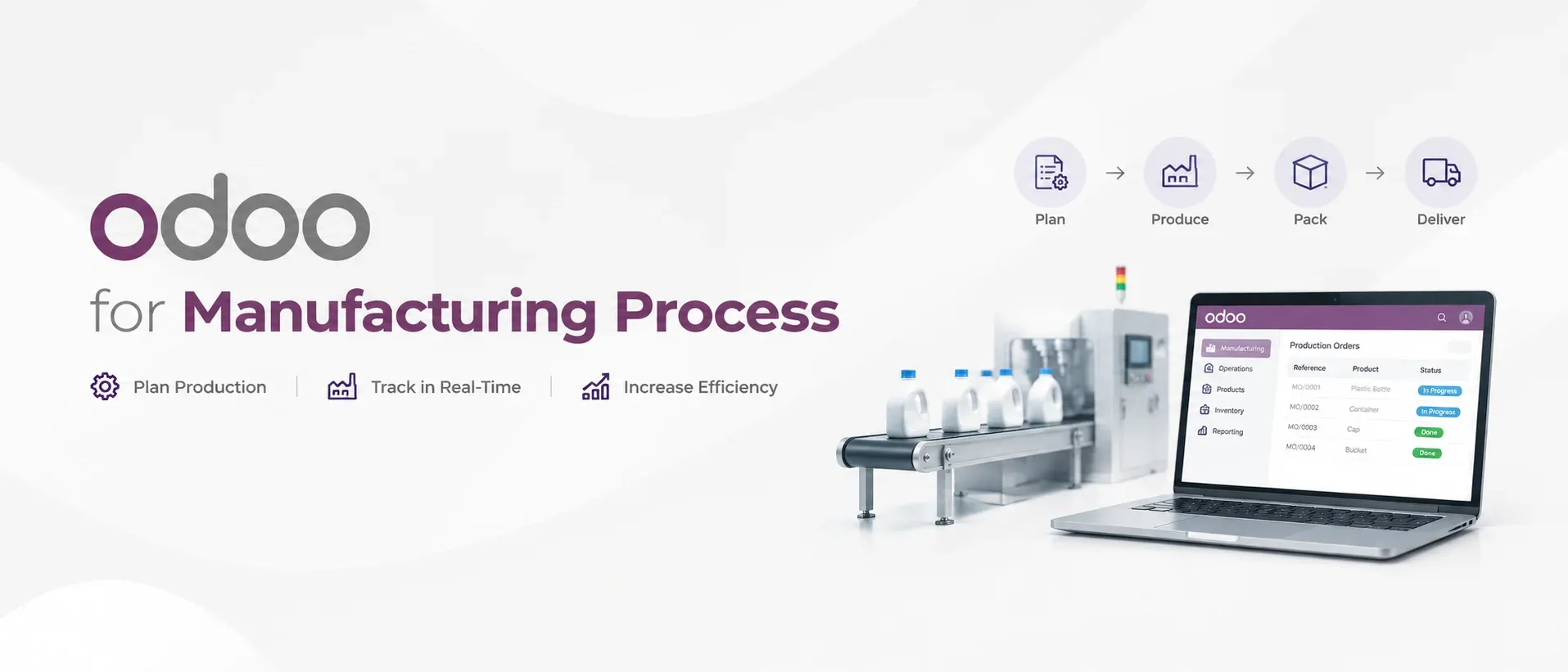
The Odoo Manufacturing Process helps businesses manage production, materials, work orders, inventory, quality checks, and costing within one system. It connects the activities involved in moving from raw materials to finished products.
Lenok Infotech helps businesses implement Odoo manufacturing based on their production requirements, from basic manufacturing operations to more detailed and multi-stage workflows.
Understanding the Odoo Manufacturing Process
The Odoo Manufacturing Process is a connected workflow that helps businesses manage production from raw materials to finished products. It covers product setup, Bills of Materials, manufacturing orders, work orders, material availability, production, quality checks, and inventory updates. By keeping these activities in one system, Odoo gives manufacturers better visibility into production and helps teams manage materials, operations, and finished goods more easily.
Odoo Manufacturing Process: Complete Workflow
The Odoo Manufacturing Process connects the key stages of production in one system, from setting up products and planning materials to completing production and updating finished goods inventory. It gives manufacturers a structured way to manage production requirements, work orders, material consumption, quality checks, and manufacturing costs without maintaining separate records for each activity.
1. Setting Up Products for Manufacturing
The Odoo Manufacturing Process begins with product configuration. Manufacturers can create finished products and define important details such as units of measure, inventory settings, routes, and other product information. Proper product setup provides the foundation for the rest of the manufacturing workflow.
2. Creating the Bill of Materials
The next stage is creating a Bill of Materials (BoM). It defines the raw materials, components, quantities, and operations required to manufacture a finished product. A properly configured BoM helps the production team understand exactly what materials and processes are needed before manufacturing starts.
For example, a furniture manufacturer producing a table may define wood, screws, paint, and packaging materials as components in the BoM. The required manufacturing operations can also be added based on the production method.
3. Preparing Manufacturing Orders
When production is required, the business creates a Manufacturing Order (MO) in Odoo. The manufacturing order specifies the product to be produced, required quantity, BoM, components, and related production activities. It becomes the main record for managing and tracking a particular production requirement.
4. Checking Raw Material Availability
Before production begins, Odoo can show the availability of the components required for the manufacturing order. The production team can identify missing materials and take the necessary action, such as purchasing or replenishing stock. This helps reduce situations where production is delayed because an important component is unavailable.
5. Planning Work Orders and Operations
For products that require several manufacturing stages, Odoo can divide production into work orders. Each operation can be assigned to the relevant work center and completed as part of the manufacturing order.
For example, a production workflow may include Cutting, Assembly, Finishing, Quality Check, and Packaging. This gives workers a clearer understanding of the sequence of operations and allows managers to track production progress.
6. Managing the Production Stage
Once the required materials and operations are ready, production can begin. Workers can record component consumption, completed quantities, production time, and other relevant information in Odoo. As production progresses, the manufacturing order provides a record of what has been produced and what activities have been completed.
7. Adding Quality Checks to Production
Quality control can be included within the Odoo Manufacturing Process at suitable stages of production. Businesses can configure quality checks for specific products or operations and record inspection results. This helps production teams identify quality issues before products move to the next stage or reach finished-goods inventory.
8. Completing the Manufacturing Order
After the required operations have been completed, the manufacturing order can be marked as completed. Odoo records the manufactured quantity and the components consumed during production. This creates a clear production record that can be reviewed by managers and other authorized users.
9. Moving Finished Products to Inventory
Once manufacturing is completed, the finished products are added to inventory. At the same time, the consumption of raw materials and components is reflected in stock records. Connecting manufacturing with inventory helps businesses maintain more accurate information about both incoming materials and finished goods.
Businesses looking for a broader Odoo for manufacturing solution can connect manufacturing operations with inventory and other ERP functions.
10. Monitoring Manufacturing Costs
Manufacturing costs can be reviewed based on the configured production setup. Material costs, operations, work center activities, and other applicable cost factors can contribute to the overall manufacturing cost. This gives businesses useful information for reviewing production expenses and product profitability.
11. Reviewing Production Performance
The final stage involves reviewing production information and reports. Managers can use Odoo to monitor manufacturing orders, material usage, work orders, production activities, and other relevant data. These records can help businesses identify production issues, monitor resource usage, and make informed decisions about future manufacturing requirements.
Benefits of the Odoo Manufacturing Process
- → Production Visibility: Monitor manufacturing orders, operations, and production progress.
- → Material Control: Track component availability and identify shortages.
- → Clear Operations: Manage work orders and production stages.
- → Less Manual Work: Record production data directly in Odoo.
- → Inventory Connection: Update raw material consumption and finished goods.
- → Production Planning: Organize production based on requirements and resources.
- → Quality Control: Add quality checks at relevant production stages.
- → Production Reports: Review manufacturing activities and performance.
Businesses can also review ERP software development services when additional ERP functionality is required alongside standard manufacturing features.
Odoo Manufacturing Process for Different Industries
The Odoo Manufacturing Process can be configured to match the production methods and requirements of different industries.
- → Food Manufacturing: Manage ingredients, batches, packaging, inventory, and quality checks. Businesses can also explore Odoo food manufacturing for industry-specific manufacturing requirements.
- → Pharmaceutical Manufacturing: Handle production, traceability, inventory, and quality processes. See Odoo for pharmaceutical manufacturing for pharmaceutical manufacturing requirements.
- → Plastic Manufacturing: Track raw materials, production operations, and finished products.
- → Furniture Manufacturing: Manage BoMs, cutting, assembly, finishing, and work orders.
- → Automotive Manufacturing: Manage components, assembly operations, work orders, and quality checks.
- → Textile Manufacturing: Track fabrics, materials, production stages, and finished goods.
- → Electronics Manufacturing: Manage components, BoMs, assembly, testing, and inventory.
- → Chemical Manufacturing: Track raw materials, batches, production processes, and quality control.
- → Metal Manufacturing: Manage raw materials, machining, fabrication, work orders, and finished products.
- → Construction Materials: Handle material requirements, production orders, inventory, and product batches.
Manufacturers can also explore Odoo for manufacturing industry and Odoo for manufacturing companies for broader industry-specific manufacturing requirements.
For healthcare-related manufacturing requirements, businesses can also refer to Odoo ERP for healthcare manufacturers.
How Lenok Infotech Helps Businesses With Odoo Manufacturing
Every manufacturer has its own way of handling materials, production stages, quality checks, and finished goods. Lenok Infotech helps businesses bring these day-to-day manufacturing activities into Odoo without forcing the production team to follow a completely different process.
The support can include:
- → Production Mapping: Understand the existing manufacturing flow and map it into Odoo.
- → Odoo Configuration: Set up products, BoMs, work centers, operations, and manufacturing orders.
- → Material Flow: Connect manufacturing with inventory and purchasing to manage raw materials.
- → Production Control: Configure work orders, production stages, and quality checks according to business needs.
- → Odoo Customization: Modify or extend Odoo when the standard manufacturing features are not enough.
- → System Integration: Connect manufacturing with other business applications where required.
- → Migration & Training: Assist with relevant data migration and train users on the new workflow.
- → Ongoing Support: Help businesses handle issues and changes after implementation.
With experience across Odoo ERP projects, Lenok Infotech can help businesses plan and implement an Odoo Manufacturing Process based on their products, production methods, and operational requirements. Businesses can discuss their requirements through our Odoo ERP implementation services or ERP implementation services.
Businesses looking for ERP implementation in Dubai can also review the available implementation services and requirements.
For businesses comparing ERP options, best ERP Dubai 2026 provides additional information about ERP solutions.
Ready to Transform Your Business?
Talk to Lenok Infotech today to discover the right IT, ERP, cloud, and digital solutions for your business. Get expert guidance tailored to your goals and take the next step with confidence.
Frequently Asked Questions
What are the 5 steps of manufacturing?
The five common steps are planning, sourcing materials, production, quality control, and finished-goods storage or delivery.
Is Odoo a CRM or ERP?
Odoo is an ERP system that includes CRM, manufacturing, inventory, accounting, sales, and other business applications.
How good is Odoo for manufacturing?
Odoo supports BoMs, manufacturing orders, work orders, inventory, quality checks, and production tracking in one system.
What are the manufacturing process steps?
Common steps include product planning, BoM creation, material preparation, production, quality checks, and finished-product inventory.
What is an ERP for manufacturing?
A manufacturing ERP connects production, inventory, purchasing, sales, accounting, and other business operations in one system.
What is the Odoo Manufacturing process?
The Odoo Manufacturing process includes product setup, BoM creation, manufacturing orders, material availability, production, quality checks, and inventory updates.
What is a manufacturing order in Odoo?
A Manufacturing Order (MO) records what product and quantity need to be manufactured and manages the related production activities.
What is a Bill of Materials in Odoo?
A Bill of Materials (BoM) lists the components, quantities, and operations required to manufacture a product.
Can Odoo manage work orders?
Yes. Odoo can create and manage work orders, operations, and work centers as part of the manufacturing process.
Can Odoo track raw materials and finished products?
Yes. Odoo connects manufacturing with inventory to track component consumption and finished products.
Does Odoo support quality checks?
Yes. Odoo can add quality checks at relevant stages of the manufacturing process.
Can Odoo Manufacturing handle different industries?
Yes. Odoo Manufacturing can be configured for industries such as food, pharmaceutical, furniture, automotive, textile, electronics, chemical, and metal manufacturing.
Can Odoo Manufacturing be customized?
Yes. Odoo Manufacturing can be configured or customized to match specific production requirements.
What are the 3 manufacturing steps in Odoo?
Odoo supports one-step, two-step, and three-step manufacturing workflows based on the configured warehouse process.
Can Odoo track production time?
Yes. Odoo can track time spent on manufacturing operations and work orders.