
Odoo ERP for Manufacturing in UAE: Bring Your Factory Operations Together
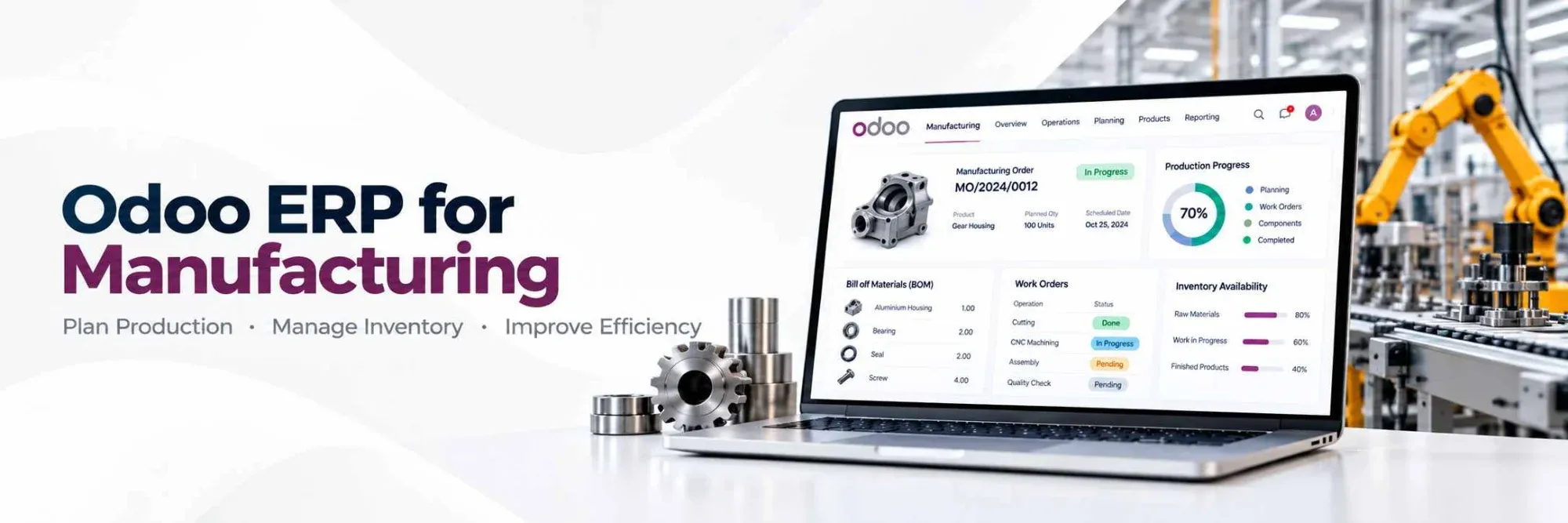
In case of any modifications in production plans or if some vital resources are delayed, the manufacturing manager needs to be aware of the concerned order and the steps that are to be taken. It becomes hard to do so when there are different databases through separate software and applications used by different departments like purchasing, production, and warehouses.
Odoo ERP for Manufacturing allows integration of all these activities through one single system. Lenok Infotech will assist you in evaluating the benefits of using Odoo ERP for your manufacturing processes.
Odoo ERP for Manufacturing Processes
Manufacturing Order and BoM
The manufacturing order determines the product and quantity to be manufactured. The Bill of Materials (BoM) lists down the requirements while the work orders configure the manufacturing operations.
An example could be the manufacturer of machinery equipment in the UAE. The manufacturing processes can include component preparation, assembly, testing, and packaging. By using Odoo to organize these processes, employees can log the manufacturing process while management will have a better idea of pending tasks.
It is important that the correct product information is entered into the system. The quantities of the components, product variants, units of measure and production processes must be verified.
Inventory and purchase coordination
Manufacturing processes are dependent on material supply. Odoo has integration features that link the manufacturing process with the inventory and purchase functions to facilitate procurement, vendor orders and warehousing operations.
For instance, if there is no material, the procurement department must be aware of the requirement and expected demand from the manufacturing process. Relevant inventory locations, stock replenishment rules and vendor lead times will facilitate this process.
The system implementation must also outline the process of reporting material damages, component rejection and inventory inaccuracies.
Quality control and product traceability
Inspections may be required for incoming materials, production process, and finished goods prior to shipment. Quality control features in Odoo can support pre-defined quality control tests, quality control points and quality alerts.
Tracking by lot and serial numbers can facilitate identification of the products and help trace their movement in the configured inventory management process. The manufacturer needs to determine the products that need tracking and data to be collected for investigation of the defect.
Costs of manufacture and reporting
Manufacturing costs will depend on such considerations as costs of components, amounts of material used and recorded manufacturing operations. Cost calculation of Odoo manufacturing orders may consider costs of components and costs of manufacturing work centers/operations set up by the user.
It is necessary to determine what management reports the manufacturer needs, for example material usage, scrap amounts, completed manufacturing and costs of manufacture/orders.
Odoo ERP Implementation for Manufacturing in UAE
A successful implementation begins with a good knowledge of the existing operation, and not just with installations.
- Process analysis: Identify process steps, product structures, warehouses, suppliers and quality needs.
- Data preparation: Check product codes, Bill of Materials, units of measurement, vendor files and initial stock before migration.
- Setup and testing: Configure necessary Odoo applications and test transactions, like missing components, rejected materials and incomplete processes.
- Training and go live: Train staff, reconcile significant documents and set up problem resolution after implementation.
The project scope must determine which needs can be fulfilled using out-of-the-box configuration and what would require customization or integration. Cost and duration depend on users, data quality, production complexity and the agreed scope.
UAE Compliance & Implementation
UAE manufacturing companies might require features related to tracking of AED accounting, different currencies, international procurement partners, landed costs and multiple warehouses. Determine your needs before you finalize the system architecture.
The tax and invoice-related requirements must be separately assessed as well. Configuring the Odoo system for VAT requirements in the UAE will not make it fully compliant with all e-invoice requirements. Evaluate the current guide on eInvoicing from the UAE Ministry of Finance and determine system capabilities that you require.
The businesses that require specialized accounting features, advanced manufacturing machine communication or specific production processes should evaluate these needs separately as well.
Standard Configuration or Custom Manufacturing Features?
Not every business requirement needs custom development. The implementation team should first establish whether the required process can be achieved using appropriate standard functionality and configuration.
| Requirement | Implementation consideration |
|---|---|
| Manufacturing orders | Match the production process to the available workflow |
| Complex product structures | Configure components, variants and subassemblies correctly |
| Quality procedures | Define the necessary inspections and follow-up actions |
| Management reports | Check whether existing reports provide the required information |
| Factory equipment integration | Assess available interfaces and data requirements |
| Special costing rules | Document the calculations and verify the resulting figures |
When customization is necessary, request a clear explanation of the business problem, the proposed solution and the testing and maintenance approach. This helps avoid unnecessary development while ensuring important requirements are addressed.
Manufacturing Explorations in Odoo by Lenok Infotech
A proper ERP system for manufacturing should mimic the way your manufacturing plant acquires materials, schedules production processes, and manages finished goods. The system configuration should be capable of providing the information required to analyse and troubleshoot issues within the manufacturing process.
Lenok Infotech can have a talk with you about the manufacturing processes at your company and can evaluate whether Odoo is suitable for your manufacturing needs.Prepare your product Bill of Materials, production process flowchart, and operational challenges that you face.
Ready to Transform Your Business?
Talk to Lenok Infotech today to discover the right IT, ERP, cloud, and digital solutions for your business. Get expert guidance tailored to your goals and take the next step with confidence.
Frequently Asked Questions
1. Can Odoo support make-to-order and make-to-stock manufacturing?
Yes. Odoo can support different production and replenishment approaches through appropriate configuration. The correct workflow depends on how production is triggered and materials are managed.
2. Can Odoo Manufacturing connect with factory machines?
Integration depends on the equipment, available interfaces and required data. Additional hardware, middleware or custom development may be necessary.
3. What affects Odoo manufacturing implementation costs?
Costs depend on the applications, number of users, data migration, customization, integrations, training and operational complexity. A scoped assessment is needed for a meaningful estimate.
4. Does UAE VAT configuration guarantee e-invoicing readiness?
No. Applicable e-invoicing requirements, supported system capabilities and necessary integrations must be assessed separately before implementation.