
Best Odoo Manufacturing Process for Production Management
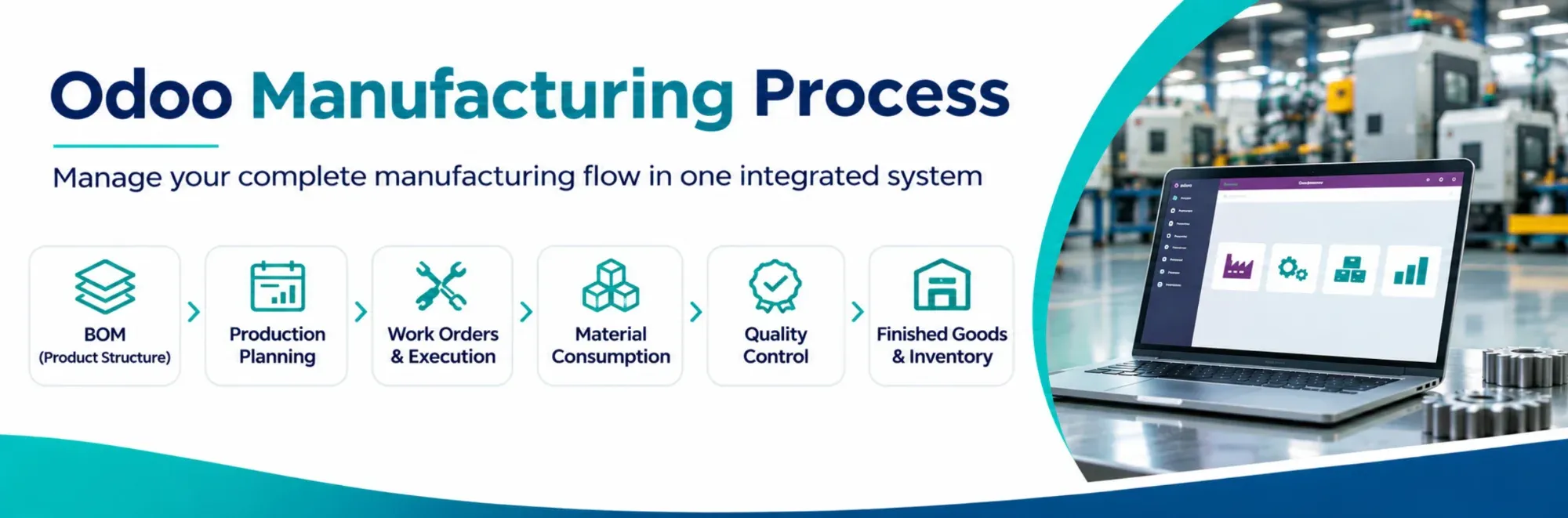
Manufacturing businesses manage raw materials, production schedules, inventory and quality checks. Handling these activities separately can cause delays and material shortages.
The Odoo manufacturing process connects production planning, manufacturing orders and work centre operations with inventory, purchasing and accounting through one ERP system.
Lenok Infotech helps businesses implement and customize Odoo to streamline manufacturing operations.
What Is the Odoo Manufacturing Process?
The Odoo manufacturing process is a structured workflow for managing production activities, from defining product components to completing and tracking finished goods.
The Odoo Manufacturing module uses Material Requirements Planning (MRP), Bills of Materials (BoM), manufacturing orders and work centres to help businesses organise production.
As an integrated Odoo manufacturing software solution, Odoo helps businesses coordinate production planning, inventory, purchasing, work centre operations and quality management through a centralized ERP platform.
Here is how the main activities work:
- Production Planning: Plan manufacturing activities according to customer demand, forecasts and available resources.
- Bill of Materials (BoM): Define the components, raw materials and quantities required to manufacture a product.
- Material Requirement Planning: Identify material requirements and help determine when additional components need replenishment.
- Manufacturing Orders: Create and manage production orders with planned quantities and operations.
- Work Centre Management: Organise production activities, assign work orders and record processing time.
- Quality Control: Configure quality checks at relevant production stages.
- Finished Goods Management: Record completed production and update inventory quantities.
For example, a furniture manufacturer producing office desks can create a BoM containing wood panels, screws and metal fittings. When a manufacturing order is created, Odoo helps check component availability and organise the required production operations. Once production is completed, the finished desks can be recorded in inventory.
This connected workflow improves visibility across manufacturing activities and reduces dependence on disconnected spreadsheets.
For a detailed overview of manufacturing ERP capabilities, explore our Odoo manufacturing ERP guide.
5 Key Steps in the Odoo Manufacturing Workflow
The following steps explain how businesses can manage a typical production cycle using Odoo.
| Step | Manufacturing Activity | How Odoo Helps |
|---|---|---|
| 1 | Bill of Materials | Defines product components and required quantities |
| 2 | Manufacturing Orders | Creates and tracks production requirements |
| 3 | Material Reservation | Checks and reserves available components |
| 4 | Work Centre Execution | Manages work orders and records production activities |
| 5 | Quality and Inventory | Supports quality checks and finished goods updates |
These stages can be configured according to the production method, product structure and operational requirements of each business.
Key Benefits of Odoo Manufacturing ERP
Implementing Odoo Manufacturing helps businesses coordinate production and related operations through a centralized platform.
- Better Production Planning: Organise manufacturing activities based on demand and available resources.
- Improved Inventory Control: Monitor raw materials, components and finished products.
- Reduced Manual Work: Automate configured workflows and reduce repetitive data entry.
- Production Cost Visibility: Track material consumption and manufacturing costs using configured costing methods.
- Quality Management: Set up quality checks and maintain product traceability.
- Connected Business Operations: Integrate manufacturing with purchasing, inventory, sales and accounting.
For growing manufacturers, these capabilities can support better coordination between departments and more informed production decisions.
How Lenok Infotech Supports Odoo Manufacturing Implementation
Selecting the right implementation approach is important because every manufacturing business has different production workflows, inventory structures and reporting requirements.
Lenok Infotech helps businesses configure and customize Odoo ERP to align with their operational needs.
Its Odoo services include:
- Manufacturing module implementation and configuration.
- Bill of Materials, routing and work centre setup.
- Production workflow customisation.
- Inventory integration and data migration.
- Custom module development and business process automation.
- Technical support and ongoing maintenance.
Businesses can also explore Odoo Development Services and Odoo Customization Services for additional implementation requirements.
Whether you manage a growing production facility or an established manufacturing operation, the right Odoo configuration can help connect essential business processes.
Ready to improve production management? Discuss your requirements with Lenok Infotech.
Ready to Transform Your Business?
Talk to Lenok Infotech today to discover the right IT, ERP, cloud, and digital solutions for your business. Get expert guidance tailored to your goals and take the next step with confidence.
Frequently Asked Questions
What is the manufacturing process in Odoo?
The manufacturing process in Odoo involves creating Bills of Materials, planning material requirements, generating manufacturing orders, managing work centre operations and recording finished goods. It helps businesses coordinate production activities through an integrated ERP platform.
Can Odoo automate manufacturing processes?
Yes. Odoo supports automation through configured replenishment rules, manufacturing workflows, scheduling and integrations. The level of automation depends on business requirements, system configuration and available data.
What are the 7 types of manufacturing processes?
Seven commonly recognised manufacturing types are repetitive, discrete, job shop, batch, continuous process, custom or flexible manufacturing, and additive manufacturing. These are industry classifications rather than seven separate Odoo manufacturing modes.
Which is better for manufacturing, Odoo or SAP?
Odoo can suit small and medium-sized manufacturers looking for modular ERP functionality and flexible configuration. SAP is often considered by large enterprises with complex operational requirements. The right choice depends on business size, production complexity, budget and integration needs.
Is Odoo better than Zoho for manufacturing?
Odoo offers dedicated manufacturing capabilities, including Bills of Materials, manufacturing orders, work centres and production tracking. It may be a better fit for businesses with more advanced production requirements, while Zoho can suit simpler business workflows.
Can Odoo manage raw materials and finished goods?
Yes. Odoo connects manufacturing with inventory management to track raw materials, components and finished products. Stock movements and replenishment can be managed according to configured inventory rules.